

EBITDA multiples (such as Enterprise Value/EBITDA) are commonly used valuation metrics. Comparing companies’ EBITDA multiples to historical averages or industry peers helps gauge whether a stock is undervalued or overvalued. A high EBITDA multiple suggests a stock is trading at a premium, while a Cash Flow Statement low multiple indicates undervaluation.
- Sometimes referred to as operating cash flow, the metric can be used to determine the operational profitability of a business, taking into account only its key daily running costs.
- It leaves out things like taxes and interest payments, which can vary a lot depending on where the company operates or how it’s financed.
- Our next section comprises two parts, where we’ll calculate the EBITDA of our hypothetical company using the top-down bridge followed by the bottom-up bridge.
- Consider, for example, a mining company that requires the heavy use of property, plant, and equipment (PP&E).
- But in reality, these adjustments allow firms to manipulate EBITDA to meet targets and mislead investors.
- For instance, companies with significant debt may have substantial interest expenses, and those with considerable fixed assets may have large depreciation charges.
Does EBITDA mean net profit?
- The next decade presents a transformative period for hotel EBITDA performance globally.
- There are several other calculations that use EBITDA, including adjusted EBITDA, the EBITDA/EV multiple, and the debt-to-EBITDA ratio.
- EBITDA is short for earnings before interest, taxes, depreciation and amortization.
- Company B doesn’t have to worry about that, as all of its funding comes from the investments of its equity holders.
- Companies with higher EBITDA ROIC generate more operating income per rupees invested.
- These companies had heavy depreciation and amortization costs, so EBITDA helped focus on their core cash flow.
By adjusting for these expenses, investors can compare companies in the same industry more easily. Common examples are one-time startup costs, real estate repairs, non-recurring legal fees, and insurance claims. Normalized values can also include an owner’s personal expenses (if these are done through the business), or bonuses. Gross profit is a company’s revenue subtracted by the costs of production. These costs include materials, shipping, equipment, utilities, and labor if the expense fluctuates based on production.
NTM EBITDA = NTM EBITDA Margin (%) × NTM Revenue
This cash is used to invest how is sales tax calculated in growth, repay debt, or distribute to shareholders without impairing operations. As a result, a higher EBITDA signifies greater financial strength and is preferred when analyzing potential stocks to invest in. Lenders and creditors use EBITDA to gauge a company’s ability to service debt. The debt-to-EBITDA ratio is a key metric that determines a business’s borrowing capacity and financial stability.
Best Small Business Banks in Texas: 15 Top Picks
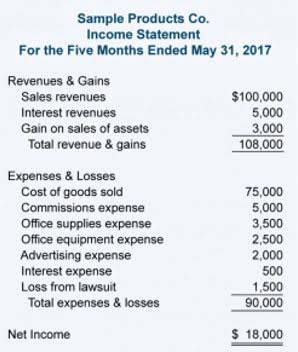
Bankers also use it to calculate a company’s debt coverage ratio, which is another measure of its ability to make debt payments. EBITDA isn’t normally included on a company’s income statement because it isn’t a metric recognized by Generally Accepted Accounting Principles as a measure of financial performance. Small business owners can use EBITDA to benchmark their performance against competitors. For example, what is ebitda a small retail business can compare its EBITDA margin to industry averages to gauge its operational efficiency and identify areas for improvement.
EBITDA should not be used exclusively as a measure of a company’s financial performance, nor should it be a reason to disregard the impact of a company’s capital structure on its financial performance. EBITDA is often most useful for comparing two similar businesses or trying to determine a company’s cash flow potential. The EBITDA multiple is a ratio that measures a company’s return on investment (ROI). To calculate an EBITDA multiple, you must first calculate enterprise value.

Key takeaways: Understanding EBITDA
The loan agreements may include EBITDA-based financial covenants, ensuring the borrower maintains a minimum level of EBITDA to demonstrate financial health and loan repayment capability. So the metric does not include any amount of tax paid by the company, which can impact its profitability, of course. When presenting your company’s EBITDA and other financials for the purpose of exiting the business, you should aim to present data stretching back 3-5 years. This volume of information demonstrates the development of your business over time, reassuring buyers that your growth potential is consistent, and you haven’t just had one remarkable year. The benefit to the EBITDA multiple is that it takes company debt into account, which other multiples like the Price-to-Earnings ratio doesn’t consider. The prevailing difference between EBITDA and EBIT is the number of steps taken.
